A direct-to-film (DTF) garment transfer passes through three machines: a printer, a powder shaker and a heat press. The shaker sits between printing and pressing. It coats the printed film with hot-melt adhesive powder, removes loose powder, then sends the film through a heated tunnel. Uneven coating or incomplete curing at this stage can affect the transfer when it is pressed.
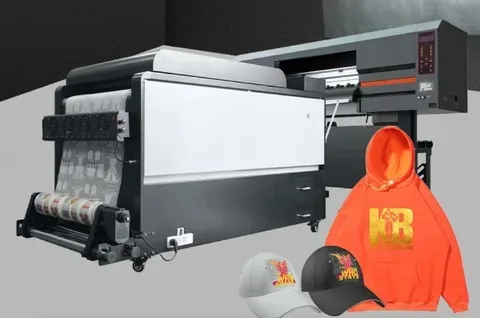
Applying and recovering the powder
On the PLUS model described in TitanJet’s July 2024 article, vibration distributes the powder across the film. A rotating beater dislodges excess powder, and the automatic return system recirculates it so the operator can top up the hopper less often. A belt carries the film through the machine, with a separate take-up for the finished roll.

Curing the film and filtering fumes
The model has a 1.14 m drying tunnel. The longer heated section gives the film time to cure as it moves through the line and helps reduce oily residue associated with incomplete drying. A built-in fume purifier separates oil mist and uses two filtration stages. These are features of the PLUS shaker described in the original article.