Application solution
Consumables and Spare Parts: Application Guide
Choose compatible inks, films and spare parts for UV DTF, raised labels and DTF textile transfers. Review maintenance, storage and process limitations.
Match the film and ink to the process
Print quality depends on both the printer and its consumables. Ink affects colour and durability, film affects transfer quality, and spare parts help keep the equipment running reliably. This guide covers application requirements, process and consumable combinations, maintenance parts, and practical limitations.
Choose the process before choosing consumables
UV DTF crystal labels
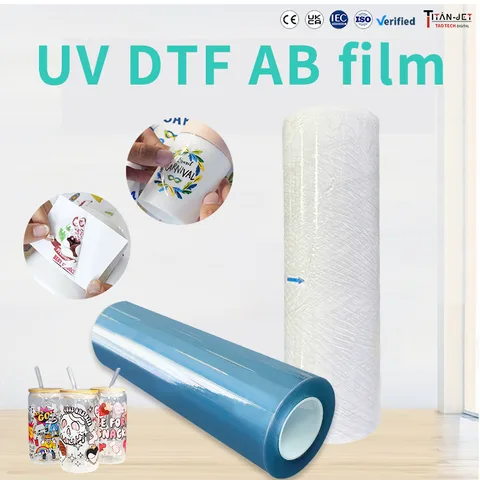
UV DTF is used for logos, custom graphics, gradients and varnish effects. The finished graphics have a raised, glossy appearance and can be applied by peeling and sticking. The process uses A/B transfer films, with white ink providing a base, colour ink forming the image, and varnish adding gloss and surface protection. A white base is needed to reproduce vivid colours on dark substrates.
Raised labels for garments and accessories
Raised labels suit garment accessories, streetwear customisation, personalised clothing and sports equipment branding. The labels have a visible embossed effect, with adjustable colour and thickness. They are printed on TPU/PU media using the corresponding TPU film. Flexible applications, including leather and raised TPU labels, require compatible flexible ink so that the print can bend with the material.
DTF textile transfers
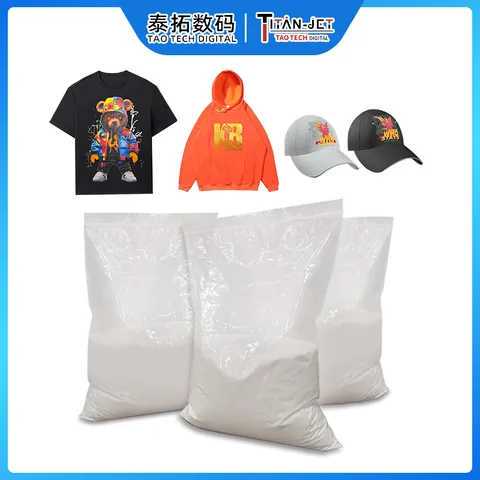
DTF suits small batches and varied designs, including work by small studios, online sellers and independent businesses. Graphics are printed on PET film. Hot-melt adhesive powder is applied evenly to the wet ink, excess powder is removed, and the print is dried and cured. The powder forms the adhesive layer that bonds the graphic to the fabric during heat pressing. Even powder coverage affects the feel and wash performance of the finished transfer.
Routine maintenance
Cleaning fluid is used for printhead cleaning and flushing the ink system. Moisturising fluid helps keep printheads moist during downtime and reduces dried-ink blockages. Routine cleaning and appropriate protection during extended shutdowns help reduce printhead wear.
Common spare parts and their roles
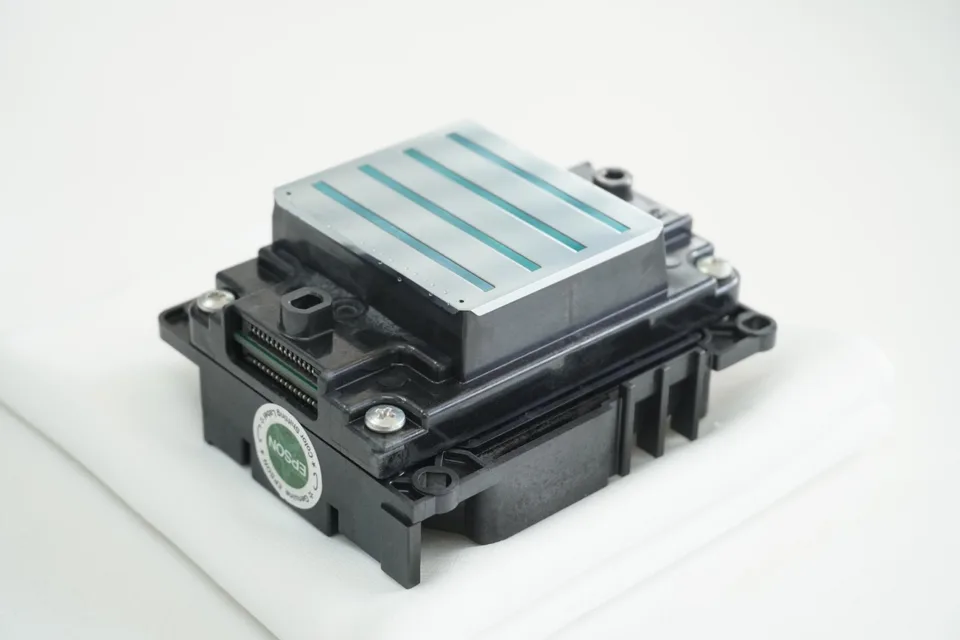
- Printheads: affect print precision and ink delivery. Persistent missing nozzles, deflected jets or poor ink delivery after cleaning call for inspection and, where necessary, replacement.
- Ink dampers and ink-system components: dampers, tubes, pumps and filters support ink flow. Restrictions can cause ink starvation or weak colour. Inspect filters and tubing regularly.
- UV curing lamps: cure each printed ink layer. Reduced lamp output can lead to tacky surfaces and poorer adhesion; replacement should follow the equipment's service requirements and operating hours.
- Cleaning and wiping parts: wipers, lint-free cloths and swabs remove ink residue. Worn wipers may leave residue on the printhead surface and affect jetting.
- Motion and structural parts: belts, rails, sliders and encoder strips need regular inspection. Wear can cause positioning errors or print misalignment.
Conditions and limitations
Confirm compatibility with the machine
Consumable specifications and spare-part models are not interchangeable across all printers. Provide the machine model before ordering so that TitanJet can confirm compatibility.
Do not substitute film across processes
A/B film, TPU film and PET film have different release, thickness and coating requirements. Using the wrong film can cause difficult peeling, incomplete transfers or poor adhesion after pressing. Test samples before changing film.
Do not mix incompatible inks
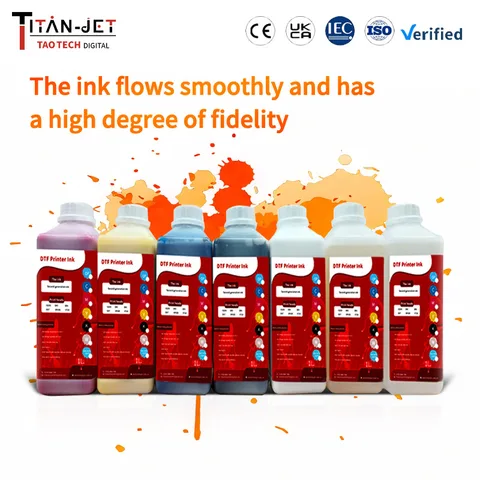
Different ink brands and systems can have different formulations. Mixing them may cause sediment, blocked ink lines or clogged printheads. When changing ink brands, the existing guidance recommends thoroughly cleaning the ink system before replacing the ink. Match flexible ink to flexible applications and the appropriate rigid ink to rigid applications.
Store consumables correctly
Keep ink and film sealed in a cool place away from direct light, excessive heat and freezing conditions. Use opened ink promptly and protect opened film from moisture. Follow the shelf life printed on the packaging; usable life after opening depends on the ink type and storage conditions.
Check consumables against warranty requirements
The existing TitanJet material states a one-year warranty for the machine, together with pre-sales and after-sales service. Consumables may be purchased from other suppliers, but they should match the equipment. Unsuitable consumables can cause printhead blockages or poor curing and may affect warranty coverage. Confirm the specifications with TitanJet before purchasing.
Keep replacement records
Record replacement dates for printheads, UV lamps, filters and other service parts. Inspect and replace them at suitable intervals rather than waiting for an avoidable production stoppage.
Frequently asked questions
Can inks from different brands be mixed?
This is not recommended. Different formulations may react, form sediment or block the ink system and printheads. Before changing brands, thoroughly clean the ink system and replace the ink as a complete change.
How long can ink be stored after opening?
This depends on the ink and storage conditions. Follow the expiry information on the packaging. Keep it sealed, cool and protected from light, and use opened ink promptly.
How can I tell whether a printhead needs replacement?
Persistent missing nozzles, deflected jets or ink delivery that does not recover after appropriate cleaning or soaking may indicate severe blockage or wear. Have the printhead inspected before deciding to replace it.
Can UV DTF, raised-label and DTF processes use the same film?
No. Their film-release, thickness and coating requirements differ. Select the film specified for the process to avoid peeling, transfer and adhesion problems.
Can consumables be sourced elsewhere?
Yes, provided they are compatible with the equipment. Confirm the specifications with TitanJet first, because unsuitable consumables can cause problems and may affect warranty coverage.
Discuss your application
Share your material and process requirements with our team.
Talk to our team