Application solution
DTF Textile Transfer Application Solution
Understand the DTF textile-transfer process, equipment, listed materials, heat-press settings and the conditions behind published wash-performance descriptions.
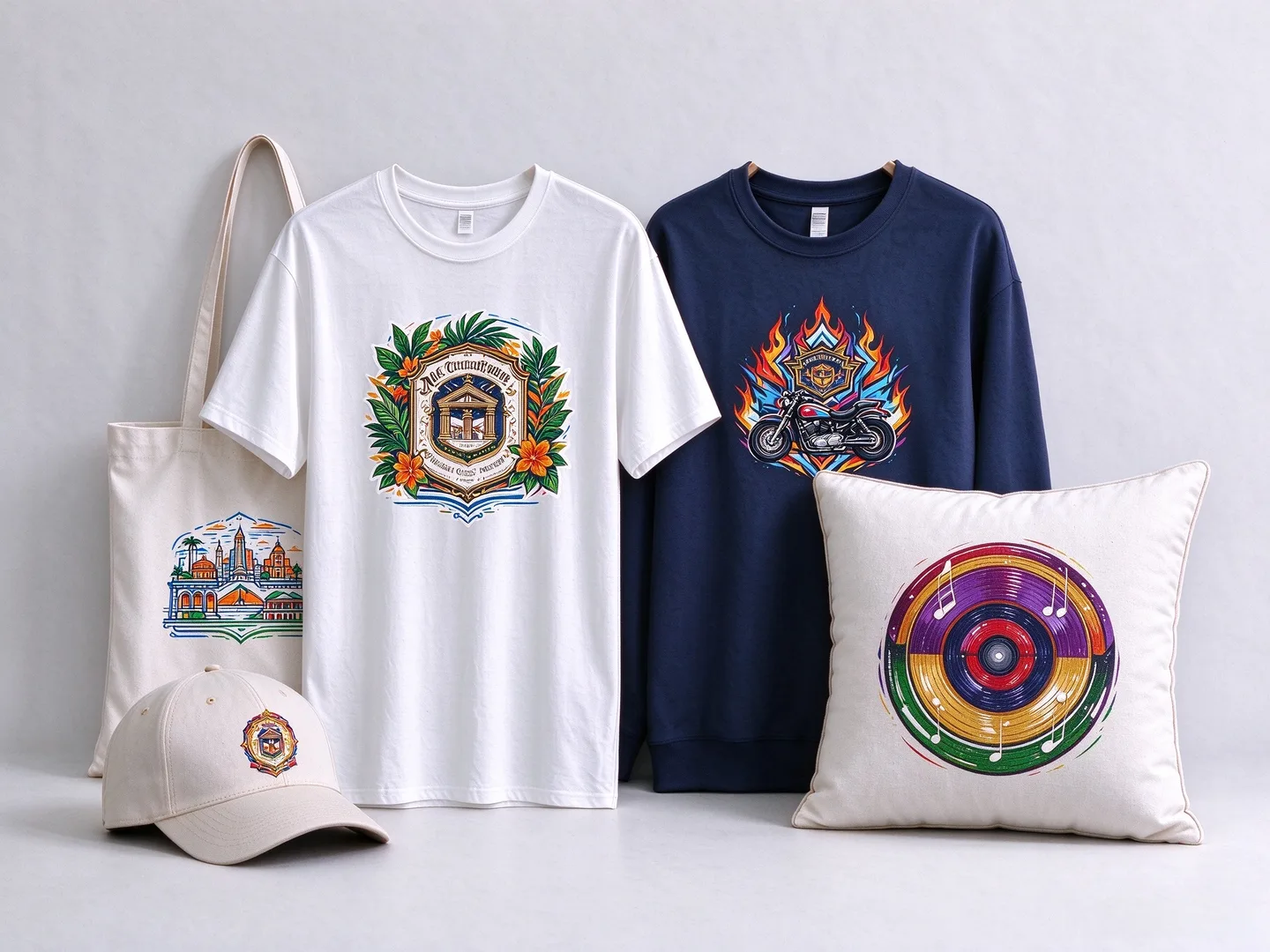
Direct-to-film (DTF) printing is a digital textile-decoration process. The graphic is printed onto PET release film, coated with hot-melt adhesive powder, dried and cured, and then transferred to fabric with a heat press.
Artwork can be changed without preparing photographic films or screen-printing plates. The process suits small batches, multiple designs and short lead times for customised clothing, promotional garments, gifts, home decoration, sports equipment, bags, footwear, hats and creative merchandise.
Application needs
- Colour on dark fabrics: colour is printed onto the film, followed by white ink to provide an opaque base. Transfers can be used on both light and dark fabrics.
- Small batches and varied designs: no plate making, colour registration, weeding or engraving is required, reducing preparation when changing designs.
- Finished garments: the source describes garments as ready to wear after transfer, without fabric pretreatment.
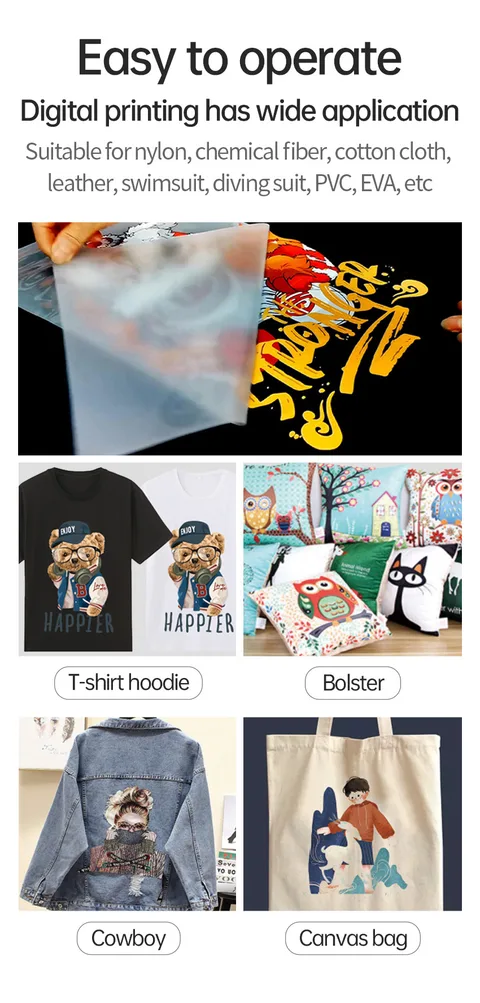
- Typical products: T-shirts, hoodies, polo shirts, school uniforms, sportswear, swimwear, wetsuits, handbags, backpacks, footwear uppers and hats.
Materials and applications
The existing material lists cotton garments, polyester sportswear, blended-fabric uniforms, nylon bags, canvas footwear, leather goods and soft toys as application directions:
- Cotton fabrics, including T-shirts and hoodies
- Polyester and blends, including sportswear and uniforms
- Nylon products, including bags
- Leather goods, including card holders
- Canvas bags and footwear uppers
- Footwear materials and hats
- Soft toys
- Sports and outdoor equipment
Confirm compatibility using the actual material and intended process conditions.
Wash-performance information
The source material describes a domestic-wash performance rating of 4–5 when suitable white ink and hot-melt powder are used together. It also describes a large chest graphic on a dark hoodie remaining intact after domestic machine-wash cycles at 40°C, without edge lifting, cracking or peeling.
These are descriptions from the existing material, not a universal performance guarantee. Results depend on the fabric, ink, powder, process parameters and test conditions. The source does not identify a test standard or cycle count for these statements.
Recommended workflow
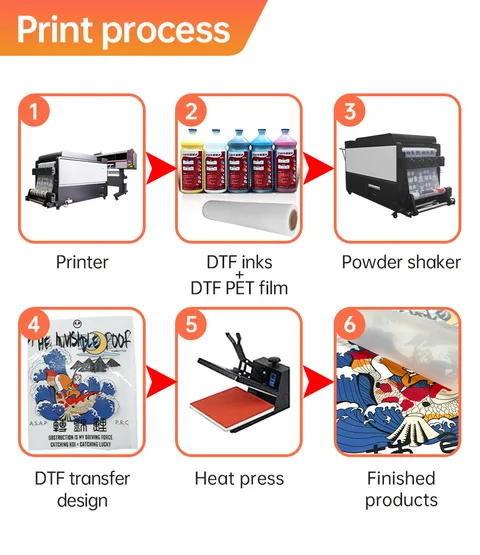
- Prepare the artwork: export a PNG with a transparent background. Retain the white-ink underbase for dark fabrics.
- Print: deposit colour and white ink in sequence onto PET transfer film.
- Apply powder and cure: apply hot-melt powder, recover excess powder, and dry and cure the print.
- Heat-transfer: the existing material specifies 150–160°C for 10–15 seconds, followed by cooling before peeling the film. Treat these as the source process settings and verify them against the actual material and consumables.
- Finish: the graphic remains bonded to the fabric. Follow the confirmed process and care requirements for the finished item.
Frequently asked questions
Can DTF be used on dark fabrics?
Yes. The graphic is printed on film in colour and covered with a white-ink layer, allowing transfer onto light and dark fabrics. Confirm the result with the material and process parameters in use.
What equipment is usually required?
A DTF printer, powder shaker and heat press are typically used. The image is printed on PET transfer film before being heat-transferred to fabric.
Are printing plates required?
No. Designs can be changed digitally without photographic films or screen-printing plates. The described process also avoids colour registration, weeding and engraving.
Are DTF transfers washable?
The existing material describes a domestic-wash rating of 4–5 and a dark-hoodie example washed at 40°C without edge lifting, cracking or peeling. Actual performance depends on the materials, processing and test conditions; the source does not specify the test standard or number of wash cycles.
What heat-press settings does the source specify?
150–160°C for 10–15 seconds, followed by cooling before peeling. Validate these settings for the chosen film, powder and fabric before production.
Which materials are listed?
Cotton, polyester and blends, nylon products, leather goods, canvas bags and footwear uppers, footwear materials, hats, soft toys, and sports or outdoor equipment. Confirm suitability under the actual material and test conditions.
What order profiles suit the process?
Small batches, varied designs and short lead times. Typical applications include clothing and promotional garments, gifts, home decoration, sports equipment, bags, footwear, hats and creative merchandise.
Discuss your application
Share your material and process requirements with our team.
Talk to our team